Glimmers Labs · Grades 1–10
Not Another Class After School.
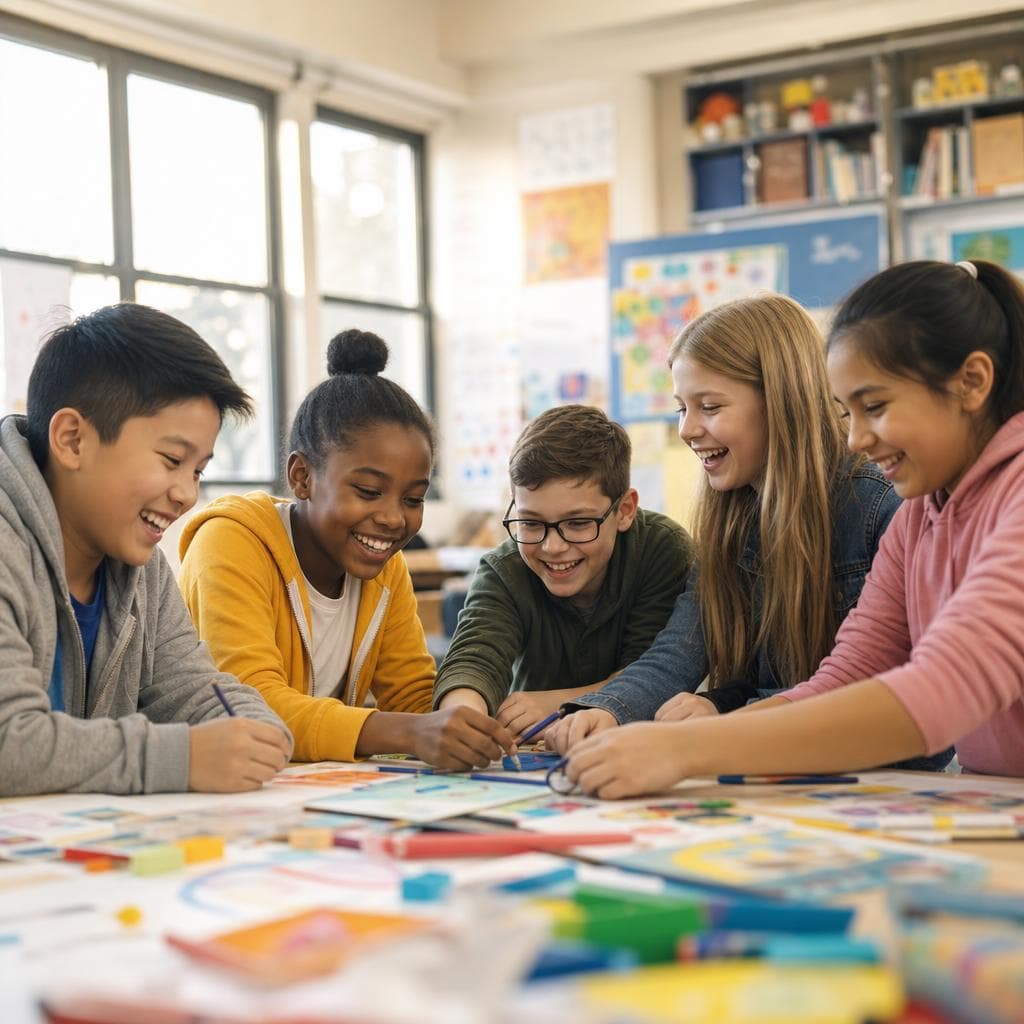
Glimmers Labs are guided, experiential learning spaces where children think, create, collaborate, build and solve, not simply listen and memorise.
Why Labs
The gap between knowing and doing
Most children can define teamwork. Far fewer have had to hold a group together when it disagreed. Most can explain what creativity means. Fewer have had an idea rejected and had to make a better one by Friday.
That gap is not a knowledge problem, so more explanation does not close it. It closes through repeated, guided practice on problems that have not been solved in advance, which is what a Lab session is for.
What children build
Seven capabilities, practised until they transfer
Named as behaviour rather than as virtues. What the child actually does in a session.
Critical Thinking
Investigates a real problem, questions the assumptions inside it, compares solutions, and explains the reasoning out loud.
Creativity
Makes something that did not exist at the start of the session, and then makes a second version that is better than the first.
Emotional Intelligence
Notices what they are feeling and what someone else is feeling, and keeps working with the group anyway.
Communication & Collaboration
Explains an idea to people who do not already agree, listens to a competing one, and builds something jointly.
Entrepreneurship
Spots a need, shapes a response to it, and tests that response against people who will say what they actually think.
AI & Digital Literacy
Uses AI tools deliberately: knowing what they are good for, where they get things wrong, and when not to reach for them.
Real-World Application
Takes a capability practised in one place and uses it somewhere that was not designed for practice.
What a week feels like
Explore → Think → Create → Improve → Apply
Every session runs this arc. Improve is the step most classrooms skip, and the one that makes the rest stick.
- 01
Explore
The session opens with something real: a problem, an object, a question with no answer at the back of the book.
- 02
Think
Children work out what is actually being asked, what they already know, and what they will need to find out.
- 03
Create
They build a response. A prototype, an argument, a design, a plan. Something that can be looked at and judged.
- 04
Improve
It comes back with feedback, and they make a second version. This is the step most classrooms skip.
- 05
Apply
They use the same thinking on a different problem, which is the only real evidence that a capability transferred.
Grade pathways
Five bands, five different rooms
A parent of a seven-year-old and a parent of a fifteen-year-old are worried about different things, so the pages are not the same page with the numbers changed.
Questions
What parents ask before enrolling
How are Glimmers Labs different from tuition or a hobby class?
Tuition covers the school syllabus again. A hobby class teaches one skill. Labs are neither. Children work on problems that have not been solved in advance, and what they build is judgement rather than a subject.
Do Labs interfere with schoolwork?
Sessions are weekly and set no homework. Children who plan, revise and explain their reasoning tend to carry those habits into school.
What ages are Labs for?
Grades 1 to 10, split into five bands. Each band has its own projects and outcomes rather than the same session pitched louder or slower.
Do I need the Glimmers App to enrol in a Lab?
No. They reinforce each other: the App builds everyday practice, Labs put it into a room with other children, but each works on its own.
Who runs the sessions?
Every Lab is run by a trained Glimmers facilitator working to a common delivery standard. Facilitator backgrounds and that standard will be published on this page.
How do I know if a Lab is near me?
Locations are being confirmed. Join the list and we will tell you when a Lab opens in your city, or ask us directly through support.
Enrol your child in a Glimmers Lab
Labs are opening city by city. Join the list and we will tell you when one opens near you.